Saturday, 30 May 2015

Bears in our Backyard

When we first moved into our condo at Sun Peaks, BC, we were concerned that we would miss having a back yard.  but we soon realized that the entire resort area is our backyard.  The photo below is the view from our door following a Spring snowfall.  The area is full of walking paths and hiking trails and we are surrounded by forest, flowers and wildlife everywhere we go.

Our backyard April 23, 2015 looking across the 16th fairway to the ski runs on Sundance Mountain
Our backyard and golf course May 1, 2015 looking towards Mt. Morrisey.  Our condo building is on the left edge.
Spring at Sun Peaks is the best time to view bears.  In fact, there are bears everywhere!  We wear our bear bells even along the paved walking paths weaving in and around the village as we are in the forest everywhere around here.  The photo below was our first brown bear spotting, just above the village.
Brown bear in our backyard, half way up Hi-Voltage ski run on Mt. Tod, near the Burfield chair lift
These two black bears are just a short distance above the center of the village.  A mother bear and two cubs has been spotted numerous times but all we've seen is adult bears so far.
Black bears in our backyard, half way up Cruiser ski run on Mt. Tod near the Sunburst Express chair lift

This Red Fox walks across the golf course every day, right in front of our living room window.
Red Fox in our backyard, on the golf cart path across the 16th fairway

Red Fox watching golfers on the 16th fairway, waiting to cross

Red Fox watching me, watching him


Mule Deer in our backyard, snacking on the edge of the 16th fairway

Marmot in our backyard, in the rough off of the 16th fairway
We've gotten together with a group of around 20 other locals who meet for drinks every Tuesday afternoon (VERY well attended) and coffee Thursday mornings (not as well attended).  A lot of fun and VERY active people.  After all, they chose to live in a ski resort.  They are all very avid skiiers, downhill, cross-country, snow shoers, and fishing and hiking and running.  One of the guys in the group has begun organizing group hikes.  There are dozens of well known and marked hiking trails around here and perhaps just as many lesser-known unmarked trails.  It is one of these trails that we chose to hike on after coffee this past Thursday to McGillivray Creek Waterfalls.

The trail starts from the main road just above Whitecroft.  It was a short 10 or 15 minute hike to the falls, along a pretty rough trail, over huge boulders at times but an easy hike.  The Falls at this time of year are pretty dramatic with the runoff being so high.
McGillivray Creek.  The path follows this creek to the Falls.
Our hiking group at the Falls.

McGillivray Creek Falls

McGillivray Creek Falls
 
Dave getting up close to McGillivray Creek Falls

Sunday, 12 April 2015

Parque Ecoturistico, Manglares de Dzinitun

There's always something new to see or do in Celestun.  Carlos took us on a bicycle tour into the Manglares de Dzinitun to see the site where the flamingos come in to rest for the night.

We started about an hour before sunset, riding south through the Manglares between the Ria and some inlets.  The first part of the ride was pretty easy, following a narrow, sand path through the Manglares.  


I spotted this brilliantly coloured Oriole perched on a stump in this "petrified forest" area.  A change in the tides killed off all of the trees in this area, leaving a foreign landscape, interesting for photography.


We reached a point where we had to cross through thicker vegetation and so left the bikes behind to walk along this boardwalk.  It is very uneven and rickety, with loose and broken boards, crossing over swampy areas and winding its way through the manglares to the Ria.
Carlos, Marie-Francoise and Chris at the Ria

Walking on the boardwalk through the manglares we made our way back from the Ria to where we left our bikes behind.

We reached the flamingo bedroom just as the sun was setting.  They have a boardwalk built out into the inlet with a small seating area under a palapa out in the water.  As we were very close to the flamingos, we had to walk very slowly and quietly to avoid spooking them.


Carlos, Marie Francoise and Chris at the flamingo viewing station

Leaving the flamingo viewing area


Walking our bikes across the boardwalk
Sunset over the "petrified forest"


Tuesday, 24 March 2015

Lives Without Hope


My wife Chris and I discovered Celestun, Yucatan, Mexico about 8 years ago. It is a beautiful, culturally rich, small fishing village, within a protected biosphere reserve.

It was shocking to us to discover that regardless of the fishing and tourism opportunities, many families live hopeless lives in abject poverty, on top of heaps of garbage, in tin shacks without a roof,no bathroom and cooking over open fires. We were embarrased by our comparably wealthy and healthy lifestyle and determined to find a way to help.

In our search, we met Isaura Rojano Gallegos and Addy Marlene Trejo Basulto, the President and Secretary of the non-profit organization Tixkuncheil Presente, A.C.

Together, for the past five years, with hardly any funding, they have been able to gradually make a real difference for a small number of families through counselling, English classes, community activities and self-esteem workshops. And there are dozens of families here that desperately need their help.

Their dream is to create a Lifeskills Training Centre and fund ongoing services to the children, single mothers and families in need in Celestun. My goal is to help them make this dream a reality.


Recently, I visited some local families that Addy and Isa have been helping. Our first visit took us along the narrow, rough track that serves as a road to the dump. It follows along the edge of the waterway that is a marina for the local fishing boats. It is incredibly polluted and derelicts and drunks lay around the area, some seeking shade under tin and cardboard shelters. It is definitely NOT anyplace that I would walk on my own and certainly never visit at night. This is where I met three girls living with their grandmother and her fisherman husband.

Laura (12), Maria (15), Reyna (7) and their grandmother Isabelle
Isabelle preparing supper over a wood fire
Isabelle cooks all of their meals in a small, dented pot over an open fire.  Her husband is a fisherman who often brings home little or no money these days.  Fishing is poor lately, the area heavily over-fished, and the cost of renting the boat and gas keeps going up.

The hopeless situation is one that in many households can lead to abuse and domestic violence.  The girls father left two years ago.  Their mother moved away to live in another city two months ago, leaving the girls in the care of their grandmother, Isabelle.  She tells me she has a heart condition and hasn't got the energy to take care of the girls.  Plus she says they are getting more rebellious and too much to handle.  Seven year-old Reyna ran away last week, looking for her father.  Luckily they found her within a day and brought her home safely. Around here, she could have disappeared forever, almost anything imaginable could have happened to her.


7 year old Reyna misses her parents

12 year-old Laura is bored and rebelious

Isabelle has no energy, with her heart condition

Isabelle tells us that the girls mother is now with a man from out of town who doesn't want children, so she does not contact the girls.  The girls are naturally feeling rejected, angry and rebellious.

Isabelle explains that she has no energy due to an enlarged heart condition.  The doctors tell her that she should have surgery but she is afraid to.  She is not afraid for herself, but she says "If I die in surgery, what will happen to the girls?"

The girls are potentially at great risk from individuals or gangs in the area where they live.  Drugs, prostitution, physical and sexual abuse and even child trafficking are all potential outcomes for adolescents living at risk in this type of environment.

Addy and Isa meet with Isabelle and the girls as often as they can for counselling and moral support.  They have Maria and Laura both attending English classes.  Knowing English opens the door to many more job opportunities, and higher pay.  Either working for expats or various positions in the local tourism industry.  Keeping them in school provides them with a certain amount of support and protection during school hours and education will help keep their dreams alive of a better future.


Our next stop was just a few blocks from our home, on a side street near the marina, within sight of one of the larger fish plants in Celestun.
Margarita, her son Ricardo (18) and her grandson Frank (5)
Like the majority of men in Celestun, Margarita's husband is a fisherman.  There are a handful of men in town who operate fishing companies.  They own a warehouse for fish packing, as well as the boats and fishing gear and rent this equipment and provide the gas for the fishermen.  Margarita's husband works for one of these companies.

He leaves early each day before sunrise and returns after many hours on the ocean in a small boat. They unload their catch and the company keeps everything that can be sold, allowing the fishermen to keep only the undesirable or undersized fish for themselves.  Their rent for the boat and equipment for the day is about 800 pesos.  If the catch is too small to cover that, the fishermen have to pay cash to the boss in addition to giving them all the fish they catch.  Many days Margarita's husband comes home with less money than he had when he left in the morning.  Fishing is increasingly poor and he says it's cheaper to stay home and drink than to fish all day and pay for it instead of getting paid.

Margarita works about 6 hours every day at the fish plant, Cleaning and filleting the catch that her husband and the other fishermen bring in.  She earns about 145 pesos (about $12) a day.

Margarita's daughter Clara is 21 years old and works full time (24/7) at a small hotel.  She lives there alone and has to be available in case a guest arrives.  She is paid 200 pesos a day (about $16) for 24 hours.  She can come home only on Sundays.  Clara's son Frank has to live with Margarita who cannot watch him much as she is at work every day.  He is at risk of abuse, domestic and community violence with gangs and drugs and crime.  He is 5 years old.
Frank walks through the piles of garbage surrounding their home


These stone and tin shacks are common homes
Margarita's son Ricardo is 18 years old.  He has no job but helps to look after Frank.  He has no idea of what his future holds.  He sees his father fishing and bringing home almost no money.  Young men in his situation live with the risk of gangs and peer pressure to be involved with drugs, prostitution and other crimes.  He does not have any hope or dreams for a brighter future.  Life appears hopeless.
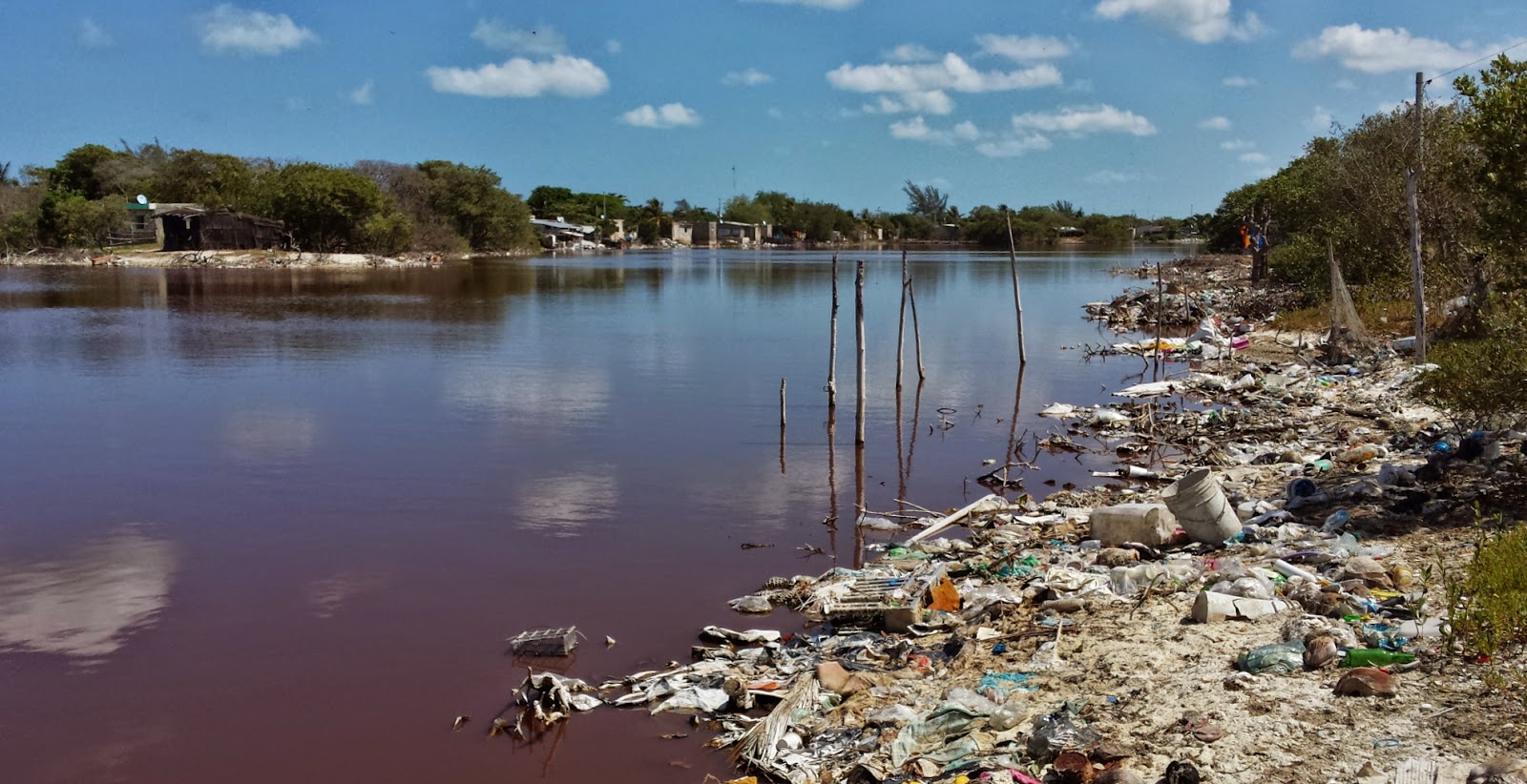
The marina shoreline is thick with garbage.  


A typical "kitchen" for many families in Celestun

Tixkuncheil Presente, A.C. is a non-government, non-profit organization, which is basically just two individuals, Isaura Rojano Gallegos and Addy Marlene Trejo Basulto.  Together they work in the community offering counselling, support, advice, and a variety of classes and events to help ensure there is a future for people like Isabelle and Margarita and the families that they find themselves taking care of.

They operate with very little in the way of private donations and no guarantee from day to day of their work continuing, and no possibility of expanding the help that they provide.  They are making a real difference to individuals in Celestun.  Providing counselling, someone safe to come to, access to education, life-skills training and safe social activities, and hope for the future.  

Please read their STORY and learn about my campaign to raise a little money to help Addy and Isa fund just one year of their work.  The people here have so little and no reason to expect anything to change.  Their lives are often hopeless and full of pain and suffering.  Just a little cash can help keep Addy and Isa working to help provide a future for them.  

Please read about our campaign, share this story, and if possible, donate a little cash to help them.


Addy teaching a class

The Cine Club.  Providing entertainment and education

Culture of Equality for Peace event

Healthcare lessons from Canadian volunteer nurse
Learning First Aid for fractures

Canadian nurse volunteer teaching how to save a choking baby
Canadian volunteer nurses teaching First Aid


Tuesday, 3 March 2015

Papayas in Our Yard

Papaya plants can be male, female, or bisexual, and you want to make sure that you have some females or bisexual plants amongst your seedlings. The male papayas don't bear fruit.

Three years ago, we returned to Mexico and discovered that our friend Wanda Folden had planted a papaya tree in our yard. Not knowing the sex of the tree, we had to wait a year to see if it might bear fruit. As it turned out, we have a bisexual tree and it is bearing an abundant supply of fruit!

Papayas are fast growing, single stem plants. The trunk is soft and does not have a bark, and papayas don't have branches.

The leaves are huge and don't last long. Usually you have a tall trunk with a crown of leaves at the top of it. The overall appearance is a bit like a palm tree.

Last year we picked our first papaya but it was too green and bitter. This photo shows our first, tree-ripened papaya.


And unfortunately, this photo shows what can happen to an unprotected, tree-ripened papaya from birds, fruit bats and possums, all of which we have here.

If you pick the papaya a couple of days early, it will continue to ripen on your kitchen counter but it can be a little bitter. The fruit sweetens as it ripens on the tree and does not sweeten ripening on your counter.

As this hole in the fruit appeared overnight, I suspect fruit bats although we do see possums in the yard pretty frequently too.


Not wanting to grow papayas just to feed the wildlife, I made a cage of chicken wire around the fruit.

You can see the lowest hanging and largest papaya on the tree beginning to ripen.

Once the fruit begins to ripen it can change from green to yellow-orange within a couple of days. You want to wait until at least 80% of the colour has changed. If you pick it too soon, it will be bitter. If you leave it too late, it will become mushy.  Picking is easy; simply grab hold of the papaya and twist it a little to break it off of the stem connecting it to the trunk.


These two papayas ripened on the tree two days apart.  We picked them when the colour was close to 90% changed.

Apparently, the best way to finish off the ripening process is to then leave them on your kitchen counter for two days, then in the fridge for another 4 or 5 days before cutting them open to eat.

A perfectly ripened, sweet papaya!
The seeds can be saved, dried and planted.  Simply dig a hole about half a metre across, fill it half full with soil and compost, sprinkle your seeds across it and cover them with more soil and compost.  They usually take a couple of weeks to germinate.

The trees are short-lived, usually only about 3 years, so if you have the room, it's a good idea to have some new ones always growing to replace the older ones.
Papaya trees can get all sorts of diseases but the most common problem is root rot from over-watering.   They need a lot of water but make sure the soil is well-drained (ours is planted right in the sand) and give it large drinks of water every few days, giving the soil time to drain before watering again. They also require a lot of nutrients so fertilize them regularly.

Our favourite thing to use papayas for is fruit smoothies.  Here you can see the ripe, juicy papaya being cut up into smaller pieces to drop into the blender.
A bowl of fresh cut papaya, ready to blenderize for our morning fruit smoothies.
Rather than using ice cubes to make a cold, thick smoothie, we simply use frozen bananas so that the smoothie isn't diluted with water.

We dropped a bunch of cut up papaya into the bottom of the blender then blenderized it for a few seconds before adding cut up frozen bananas on top.
Adding some pineapple juice for a third fruit flavour.
And now some soy milk (I'm allergic to whey and caseine in regular cow's milk).
Simply blenderize for a couple of minutes until thick and smooth.
And you have a fantastic Papaya, Banana, Pineapple fruit smoothie!

We have also frozen the cut up papaya then blenderized it with fresh mango.  The possibly combinations are endless, and all delicious!